Featured and Trending
7 Admin Roles to Delegate Today to Beat Burnout

Medical teams have long been spending too much time on work that someone else could handle effectively.
If you’re seeing signs of administrative strain, it might be time to look at what you can delegate to remote assistants. Start with these seven roles ideal for remote delegation, especially for clinics trying to hold costs steady while easing burnout among their teams.
-
Insurance Verification Specialist
Verifying coverage is one of the most repetitive and time-sensitive tasks on your admin team’s plate. It also happens to be one of the easiest to delegate remotely. Trained remote assistants can check for patient eligibility, confirm benefits, and highlight red flags with payers, before your patient even walks through the door.
Burnout Relief:
Your front desk regains hours a week by skipping the phone loops and focusing on patients.
-
Scheduling Coordinator
Picture this: Your team but focused, not juggling calls and in-person patients.
Remote Scheduling Coordinators can manage inbound requests, handle reschedules, follow up on no-shows, and keep your schedule flowing, without slowing down your in-clinic flow.
Remote Scheduling Coordinators are also ideal for early-morning or after-hours scheduling coverage, giving your practice more availability without burning the team out.
-
Prior Authorization Coordinator
Prior auths are a known bottleneck. They require attention to detail, time spent on hold with insurers, and constant follow-ups. Delegating this task to a remote assistant not only saves hours of admin time, it also helps avoid treatment delays and improves patient satisfaction.
Fewer denials, fewer frustrated providers chasing approvals between appointments.
For practices that handle high volumes in diagnostics, imaging, or chronic condition care, offloading prior authorizations can immediately lighten the load.
-
Medical Scribe
Between seeing patients and updating the EHR, practitioners are spending hours each week on documentation, often after hours. This silent workload is one of the most significant contributors to physician burnout.
Remote Medical Scribes help reduce that burden by supporting providers in real-time or asynchronously. They update notes, complete visit summaries, and ensure charts stay clean and compliant.
-
Patient Intake Coordinator
Patient forms, ID uploads, insurance cards, consent forms, all of it adds up. When intake is done in person, your front desk ends up juggling paper, printers, and stressed-out systems.
Delegating this role to a remote Patient Intake Coordinator means that all pre-visit paperwork is handled ahead of time. Patients fill out digital forms, coordinators review for completeness, and everything is ready in your EHR when the patient arrives.
-
Receptionist
Reception is more than just answering phones. It’s appointment reminders, cancellation handling, patient questions, and follow-up scheduling, all at once.
Remote Receptionists work just like your in-clinic team, but without adding pressure to your physical space. They handle overflow calls, reschedules, and routine questions, and even help triage messages so your team isn’t constantly interrupted.
The phone rings 5 times in 10 minutes.
Your in-clinic team is with patients.
Remote receptionist answers, reschedules a visit, fields a billing question, and updates your calendar.
-
Medical Billing Specialist
Chasing claim statuses, resolving denials, and submitting resubmissions can consume entire days, significantly contributing to burnout in medical practices.
Remote Medical Billing Specialists take that load off your plate. They’re trained in U.S. payer systems, familiar with your EHR, and focused on getting claims through quickly.
Even offloading one of these roles can shift your team’s productivity by the end of the week. You don’t need to overhaul your org chart, just start by delegating the admin work your care team shouldn’t be stuck doing anymore.
Edge can help you manage burnout by taking the admin load off your team.
We’re building a smarter, more sustainable way to work.
From intake and scheduling to billing and scribing, Edge connects you with remote professionals who perform specialized roles, trained in healthcare admin. Let us help you reduce burnout and restore focus with admin talent you can trust.
More from Medical

Virtual Front Desk for Medical Offices: Cost Guide
If you’ve already read what a virtual front desk covers, the next question is more practical: how does it actually get billed, set up, and connected to the systems your practice already runs. Most vendor pages skip straight to a number. The number matters less than the structure behind it, and the structure is where …
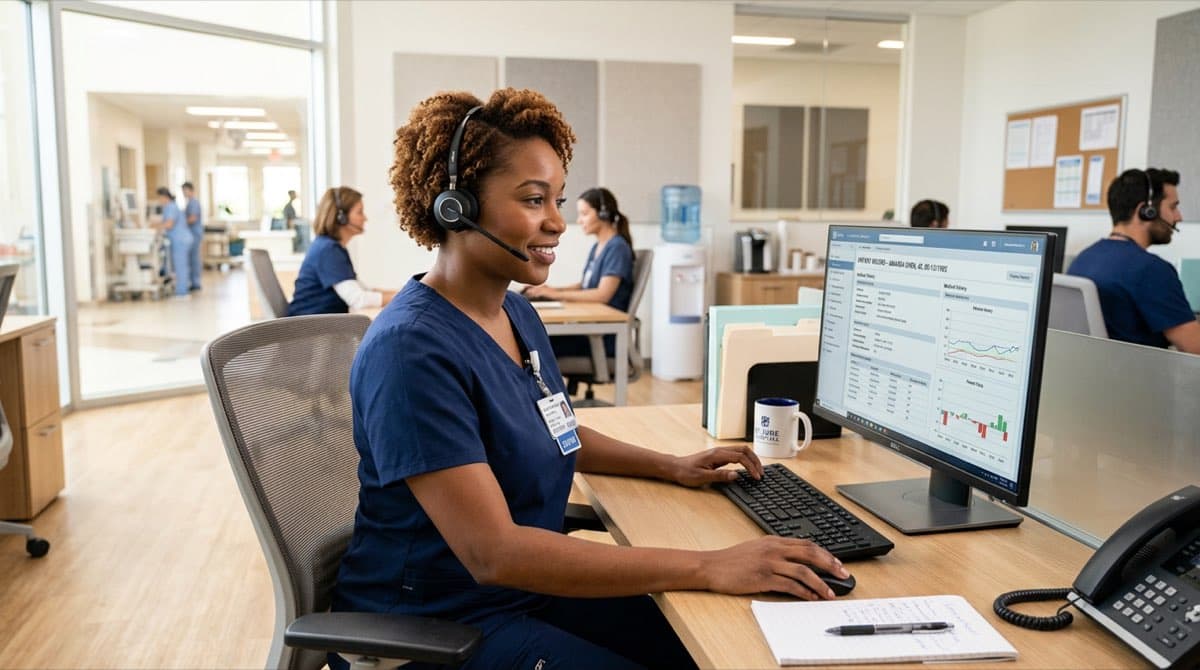
HIPAA Compliant Answering Service: What to Know
Most practices think their answering service meets HIPAA requirements once the vendor signs a Business Associate Agreement (BAA). However, the agreement alone doesn’t protect patient information. It doesn’t encrypt messages, train staff, or ensure agents understand medical calls. Practices that rely on paperwork alone may discover these gaps when a routine after-hours call goes wrong. …

What Is a Virtual Medical Receptionist? A Complete Guide for Practice Owners
A virtual medical receptionist is a HIPAA-trained professional who handles a practice’s phones, scheduling, and patient intake from outside the physical office, working inside the practice’s own EHR and phone system. The work is the same as an in-house front desk role: answering calls, booking and confirming appointments, verifying insurance, and routing messages to the …

Healthcare Administrative Capacity Crisis: Why Care Delivery Is Slowing
For years, operational strain in healthcare has been framed as a staffing shortage. But the data points to something deeper: a healthcare administrative capacity crisis. Organizations are being asked to reduce staffing while administrative workload continues to rise, creating a widening gap between the work that must get done and the capacity available to execute …