Featured and Trending
Beyond Hygienists: The Staffing Crisis No One’s Talking About

 For all the focus on clinical care in dental practices, there’s a growing problem unfolding in plain sight: administrative overload. At the front desk. In the billing department. Inside every practice where phones are ringing off the hook, claims are stuck in limbo, and staff turnover is stretching teams thin.
Our latest industry report, The Dental Practice Efficiency Report: How Remote Admins Are Reshaping Operations, dives deep into the operations behind America’s dental practices, and what’s not working. Drawing on industry data from practices nationwide, the report uncovers the true scale of an admin staffing crisis that’s long gone underreported.
The average dental practice now spends over 27% of its revenue managing administrative tasks. That’s more than one in every four dollars, lost to phone follow-ups, denied claims, and staff churn.
“When admin teams break down, it’s not just a workflow issue. It impacts cash flow, compliance, and most importantly, patient experience,” said Dr. Rihan Javid, co-founder and president at Edge.
And while dentists have been racing to hire chairside talent, there’s been far less urgency around solving front office inefficiencies. That lag is coming at a cost.
Legacy staffing models are failing modern dental practices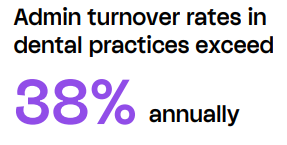
What our research makes clear is that the staffing model many practices still rely on—entirely in-house, entirely local—has stopped being sustainable.
In today’s market, hiring a new in-house treatment coordinator or insurance verifier can take 35+ days and cost thousands. And retention isn’t improving, only 61% local admin hires stay for more than a year, according to our survey findings.
Meanwhile, the admin workload keeps growing. Patients expect faster communication. Carriers demand cleaner submissions. And practices are expected to do more, with fewer people.
“If dentists want to protect production, they have to protect the admin infrastructure that supports it,” said Iffi Wahla, Edge CEO.
What practices are doing differently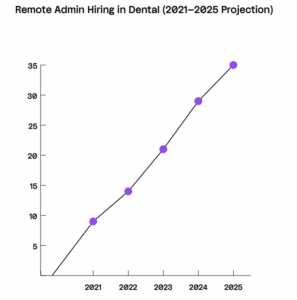
Edge’s report spotlights a new operational model gaining traction: remote-first, compliance-aligned admin teams built from a global talent pool.
The research highlights measurable gains from dental groups that have adopted this model:
- 40% lower staffing costs from offloading admin work to trained remote professionals
- 86% retention rate among global hires, more than 20 points higher than U.S.-based hires
- Faster time-to-fill, with key roles filled in just 12 days on average
Crucially, these professionals aren’t just available, they’re qualified. More than 80% of Edge’s remote talent pool is ready to complete dental-specific compliance certifications, including HIPAA and SOC 2. They’re trained on dental software, workflows, and documentation standards before they ever start.
Raw insight for Dental leaders
If your practice is still relying on front desk teams to carry the entire admin burden in-house, our report offers an urgent look at what that’s costing you.
Download the full report to explore:
- Where admin bottlenecks are impacting production most
- How global teams are helping DSOs and solo practices scale smarter
- The compliance, cost, and retention data behind this shift
Unlock Your FREE Industry Report
More from Dentistry

Dental Answering Service vs. Virtual Receptionist
A dental answering service picks up calls your team can’t get to and passes along a message. A dental virtual receptionist does the actual work behind the call: booking the appointment, updating your practice management system, confirming insurance, in real time, during the hours your phones are busiest. The difference isn’t who answers. It’s whether …

Dental Office Answering Service: Cost & Features Guide
A dental office answering service can mean two very different things: a script-reading operator who logs a message, or a trained person who can actually see your schedule and book the call. Price varies by call volume, coverage hours, and language needs, but the feature list matters more than the rate card. A cheap service …

Dental Virtual Receptionist: What It Is and How It Helps Your Practice Grow
The phone rings while you’re numbing a patient. It rings again during a cleaning. By the time someone’s free to call back, the person on the other end has already booked with the practice down the street. A dental virtual receptionist exists to close that gap: a dedicated professional who answers calls, manages the schedule, …

Why Dental Virtual Assistant Services Are Growing in 2025: Benefits for US Practices
In 2025, remote dental staffing has emerged as a smart solution for dental offices facing staffing and cost challenges. U.S. dental practices are dealing with a perfect storm of rising overhead, workforce shortages, and higher patient expectations. In a late 2024 American Dental Association survey, about 62% of dentists identified staffing shortages as their biggest …