Featured and Trending
Choosing the Right Remote Medical Talent: A Step-by-Step Guide

In today’s healthcare landscape, remote medical talent has become indispensable. They help streamline administrative tasks, support clinical operations, and enhance patient care—without being physically present in the office. However, hiring the right remote medical talent requires careful consideration to ensure they meet your practice’s unique needs.
This guide walks physicians and healthcare administrators through the step-by-step process of selecting, hiring, and onboarding remote medical talent across various roles.
1. Define the Role and Responsibilities
Before beginning your search, clearly outline the responsibilities your remote medical talent will handle. Common roles and tasks include:
- Remote Medical Assistants: Scheduling appointments, handling phone calls, managing patient records, and processing insurance claims.
- Remote Medical Scribes: Documenting patient visits, transcribing medical notes, and updating EHR systems.
- Remote Billing & Coding Specialists: Processing medical claims, ensuring accurate medical coding, and handling insurance-related tasks.
- Remote Patient Coordinators: Managing patient follow-ups, coordinating lab results, and handling prescription refills.
- Remote Telehealth Support Staff: Assisting with virtual consultations, managing telehealth appointments, and providing technical support for virtual care platforms.
A detailed job description will help attract candidates with the right experience and skills. Learn more about different roles here.
2. Identify Key Qualifications and Skills
When evaluating candidates, look for the following qualifications:
- Medical Certification & Training: Certifications such as Certified Medical Assistant (CMA), Registered Medical Assistant (RMA), or Certified Professional Coder (CPC) indicate formal training.
- Experience in Healthcare Settings: Prior work in a clinical environment ensures familiarity with medical terminology and patient interactions.
- EHR & Software Proficiency: Experience with Electronic Health Records (EHR) systems, telehealth tools, and practice management software.
- Strong Communication Skills: Verbal and written skills are essential for patient interactions and coordination with in-house staff.
3. Ensure Compliance Knowledge
Your remote medical talent must adhere to healthcare regulations, including:
- HIPAA Compliance: Understanding patient privacy laws to ensure secure handling of medical information.
- State and Federal Regulations: Awareness of legal considerations regarding telehealth and remote medical roles.
4. Assess Soft Skills & Cultural Fit
Soft skills are just as crucial as technical qualifications. Look for:
- Empathy & Patience: Essential for handling patient communications.
- Time Management & Organization: Ensuring efficiency in managing multiple tasks.
- Problem-Solving Abilities: A proactive approach to resolving challenges independently.
5. Conduct a Comprehensive Hiring Process
A structured hiring process improves your chances of selecting the right candidate:
- Resume Screening: Shortlist candidates with relevant experience.
- Video Interviews: Assess communication skills, professionalism, and tech proficiency.
- Skills Assessment: Test their ability to use EHR systems and complete medical documentation.
- Reference Checks: Verify work history, reliability, and adherence to compliance.
6. Provide Thorough Onboarding and Training
A smooth onboarding process ensures the success of your remote medical talent. Key steps include:
- Orientation: Introduce them to your practice’s policies, tools, and workflows.
- Training Sessions: Provide hands-on training for EHR systems and compliance requirements.
- Mentorship: Assign a point of contact for guidance and support.
7. Establish Effective Communication Channels
Seamless communication is critical for remote teams. Set up:
- Regular Check-ins: Weekly meetings to discuss updates and address concerns.
- Secure Messaging Tools: Use HIPAA-compliant communication platforms.
- Collaborative Workflows: Implement cloud-based task management for efficiency.
8. Monitor Performance and Provide Feedback
Continuous evaluation ensures productivity and engagement. Consider:
- Performance Metrics: Track accuracy, efficiency, and patient interactions.
- Feedback Mechanisms: Provide regular feedback to improve workflow and address challenges.
- Recognition & Growth Opportunities: Encourage skill development and acknowledge high performance.
9. Address Legal and Logistical Considerations
To ensure a smooth remote working relationship, address:
- Employment Agreements: Clearly outline duties, confidentiality clauses, and compensation.
- Data Security Protocols: Implement secure logins, encrypted communication, and access controls.
- Time Zone Adjustments: Ensure working hours align with your practice’s operational needs.
10. Evaluate Cost and Budget Considerations
Understand the financial aspects of hiring remote medical talent:
- Salary Expectations: Research industry standards to determine competitive pay.
- Additional Costs: Consider expenses for software licenses, training, and equipment.
Building a Strong Remote Medical Team
Hiring the right remote medical talent can significantly improve your practice’s efficiency and patient experience. By following this structured approach, you can ensure you select a qualified, compliant, and culturally aligned professional to support your healthcare operations.
Ready to find the right remote medical talent? Learn more about how Edge helps healthcare practices hire top remote talent.
More from Medical

Virtual Front Desk for Medical Offices: Cost Guide
If you’ve already read what a virtual front desk covers, the next question is more practical: how does it actually get billed, set up, and connected to the systems your practice already runs. Most vendor pages skip straight to a number. The number matters less than the structure behind it, and the structure is where …
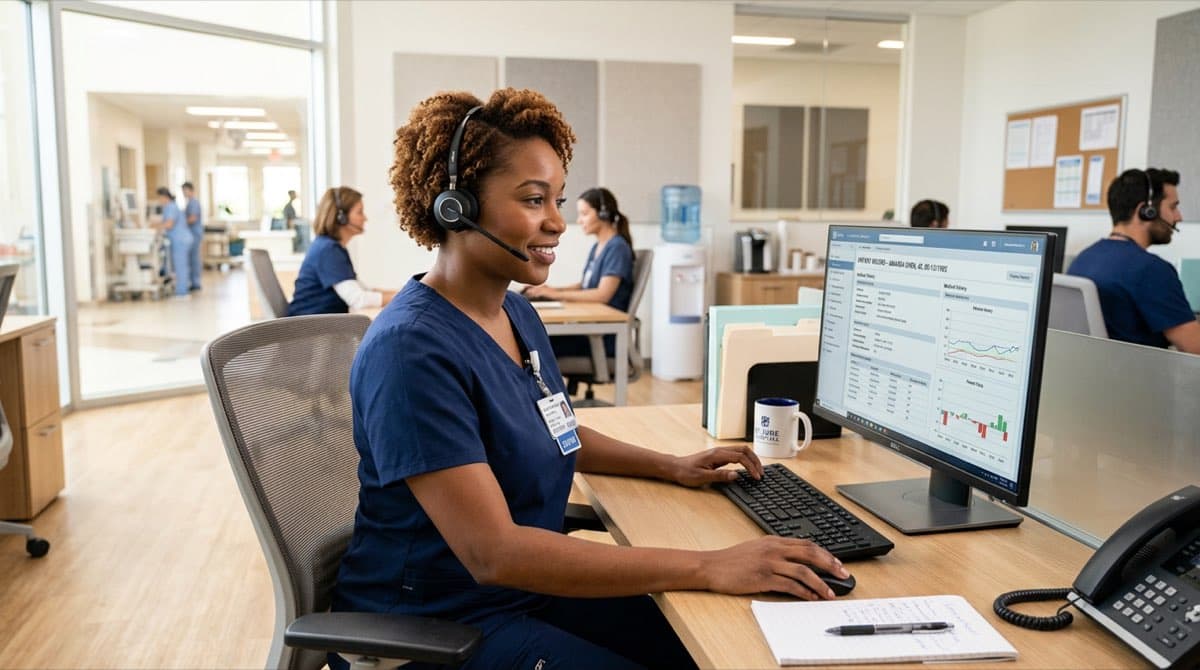
HIPAA Compliant Answering Service: What to Know
Most practices think their answering service meets HIPAA requirements once the vendor signs a Business Associate Agreement (BAA). However, the agreement alone doesn’t protect patient information. It doesn’t encrypt messages, train staff, or ensure agents understand medical calls. Practices that rely on paperwork alone may discover these gaps when a routine after-hours call goes wrong. …

What Is a Virtual Medical Receptionist? A Complete Guide for Practice Owners
A virtual medical receptionist is a HIPAA-trained professional who handles a practice’s phones, scheduling, and patient intake from outside the physical office, working inside the practice’s own EHR and phone system. The work is the same as an in-house front desk role: answering calls, booking and confirming appointments, verifying insurance, and routing messages to the …

Healthcare Administrative Capacity Crisis: Why Care Delivery Is Slowing
For years, operational strain in healthcare has been framed as a staffing shortage. But the data points to something deeper: a healthcare administrative capacity crisis. Organizations are being asked to reduce staffing while administrative workload continues to rise, creating a widening gap between the work that must get done and the capacity available to execute …