Featured and Trending
HIPAA-Compliant Outsourcing: What Healthcare Leaders Must Know

The First Question Every Leader Asks
When healthcare leaders consider outsourcing, the first concern is always: Is it HIPAA-compliant? And it’s the right question to ask. Patient trust depends on it.
The good news? Reliable medical admin outsourcing partners are built with compliance in mind.
What Compliance Looks Like
A trustworthy provider of virtual medical assistant services should:
-
Use encrypted data storage & communication.
-
Train every staff member in HIPAA standards.
-
Offer role-based access controls.
-
Conduct regular compliance audits.
Why This Matters for Leaders
HIPAA compliance isn’t just a legal requirement—it’s a foundation of patient trust. One breach can erode reputation permanently. That’s why outsourcing without compliance isn’t an option.
Red Flags to Avoid
-
Providers who can’t show compliance certifications.
-
Lack of clear policies on data handling.
-
Use of unsecured communication tools.
For more on weighing your options, check out Virtual Medical Assistants vs. In-House Staff: Pros & Cons.
Compliance & Growth Together
Outsourcing doesn’t just protect data—it frees up resources to improve care. With HIPAA-compliant staffing, you get peace of mind and efficiency.
Final Thought
Healthcare leaders don’t need to choose between compliance and cost savings. With the right partner, you get both.
Curious how compliance ties into efficiency? See Top 7 Tasks to Outsource in Medical Practices for Efficiency.
More from Medical

Virtual Front Desk for Medical Offices: Cost Guide
If you’ve already read what a virtual front desk covers, the next question is more practical: how does it actually get billed, set up, and connected to the systems your practice already runs. Most vendor pages skip straight to a number. The number matters less than the structure behind it, and the structure is where …
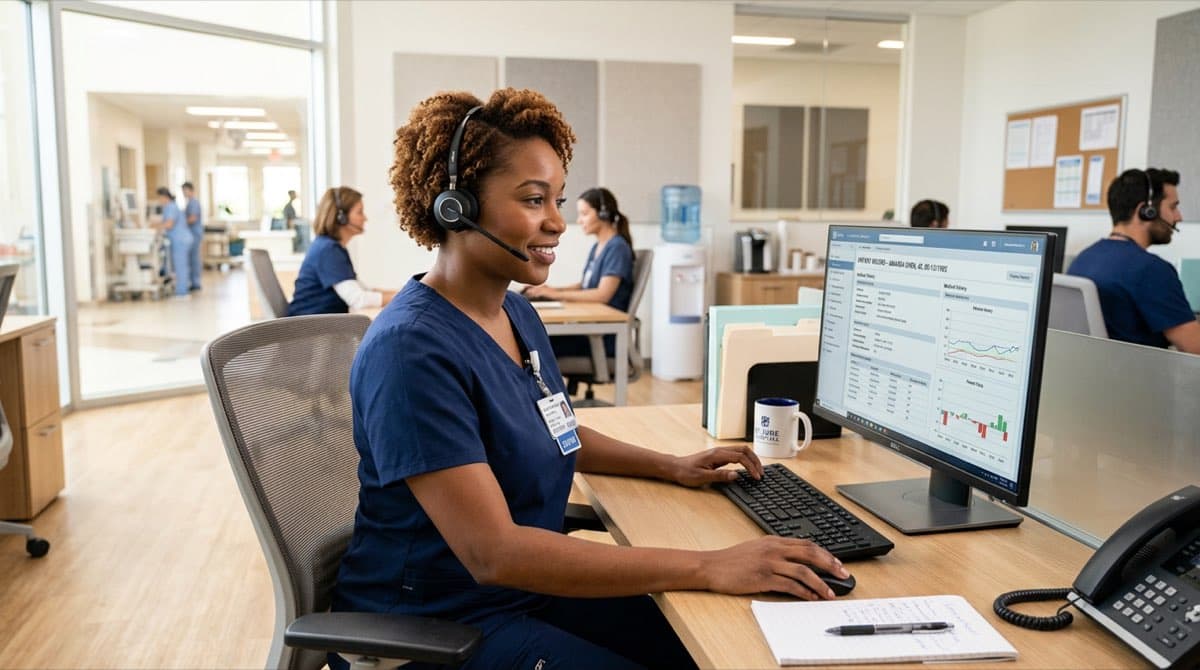
HIPAA Compliant Answering Service: What to Know
Most practices think their answering service meets HIPAA requirements once the vendor signs a Business Associate Agreement (BAA). However, the agreement alone doesn’t protect patient information. It doesn’t encrypt messages, train staff, or ensure agents understand medical calls. Practices that rely on paperwork alone may discover these gaps when a routine after-hours call goes wrong. …

What Is a Virtual Medical Receptionist? A Complete Guide for Practice Owners
A virtual medical receptionist is a HIPAA-trained professional who handles a practice’s phones, scheduling, and patient intake from outside the physical office, working inside the practice’s own EHR and phone system. The work is the same as an in-house front desk role: answering calls, booking and confirming appointments, verifying insurance, and routing messages to the …

Healthcare Administrative Capacity Crisis: Why Care Delivery Is Slowing
For years, operational strain in healthcare has been framed as a staffing shortage. But the data points to something deeper: a healthcare administrative capacity crisis. Organizations are being asked to reduce staffing while administrative workload continues to rise, creating a widening gap between the work that must get done and the capacity available to execute …