Featured and Trending
How Psychiatric Clinics Successfully Fill Empty Appointment Slots

Psychiatric clinics are busy. Whether you’re dealing with patients who are coming in for their appointments, or you’re trying to contact inactive patients to schedule them for an upcoming appointment, everything needs to be in order for your clinic to run efficiently. In order to run efficiently, the scheduling system needs to be up to date, efficient, and streamlined.
A full scheduled caseload ensures that you are making the most of your time by seeing patients without gaps that cost significant money. It comes as no surprise then, that according to Health Management Technology, “The total cost of missed healthcare appointments in the United States every year is an astronomical $150 billion.” No matter what size your medical practice is or what services you specialize in, this is a big number that is limiting your practice.
Filling Vacant & Abandoned Appointment Slots
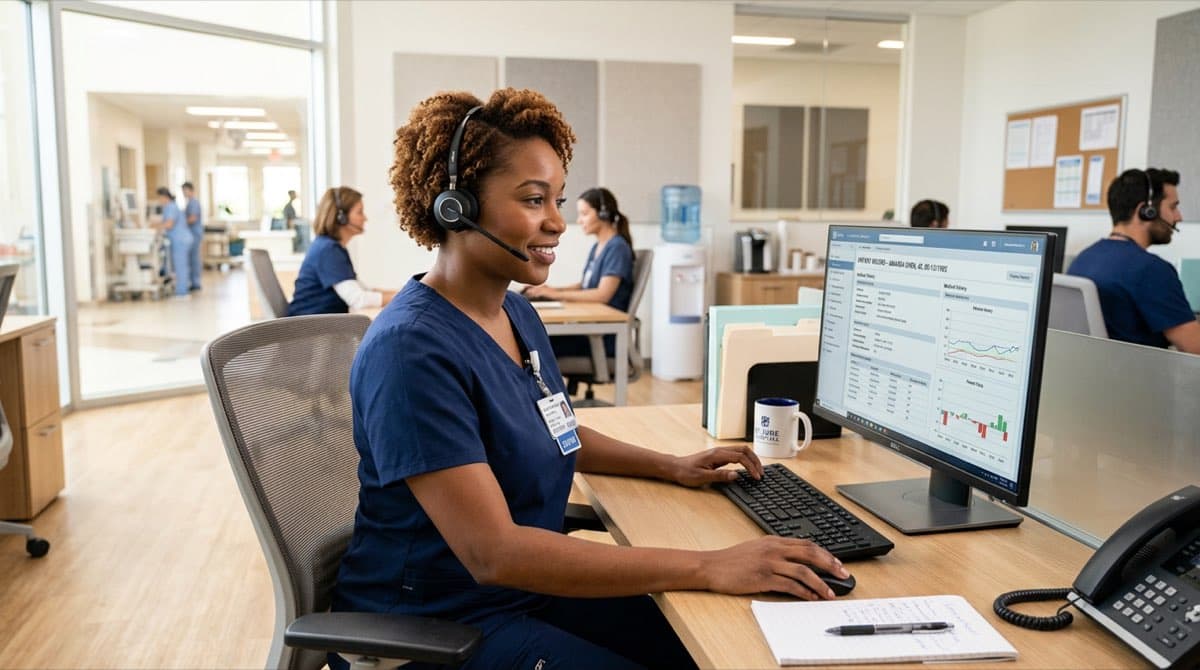
Our Ambassadors are professionally trained employees that work for you remotely. They carry out both front-end and back-end duties. This includes not only contacting active/inactive patients, but also verifying insurance eligibility, so you don’t have to worry about spending significant money or hours trying to contact these patients.
People cancel their appointments for various reasons. Our Ambassadors deliver the convenience of online (text, email and phone) scheduling that today’s patients expect. With interactive text messaging, our Ambassadors–your remote employees– will match patients with available appointments, fill cancellations, and give you and your patients control over scheduling.
As mentioned above, they contact patients to see if they’re willing to move up and fill the now vacant appointment slot. So, for example, if a patient cancels an appointment scheduled for later this week, an Ambassador will contact other patients to fill that slot.
Thus, the previously vacant slot does not cost your practice valuable time and money that could be used to help your practice grow. Just to get a sense of the numbers, each appointment lost can cost $150-$300 depending on the nature of the appointment and practice.
According to Health Management Technology, patients only reschedule 2.4% of appointments themselves. So if you’re not able to put in the effort to contact patients to reschedule appointments or fill out vacant appointment slots, you’re losing significant business. Luckily, an Ambassador can take care of these problems, allowing you to focus on treating your patients rather scheduling appointments.
We also understand that your front-office employees might not be able to take on this role because of the massive influx of daily calls and patients. They’re busy and they’re bound to forget about rescheduling appointments. Our Ambassadors are just the right fit for this job. They’ll make sure that your day is full and that you’re not losing any business because of vacant appointment slots.
Help Build Relationships With Patients
Apart from the obvious financial benefits of rescheduling appointments, taking the first step by contacting patients to fill up vacant spots will show that you care for their time. In a day and age where there is so much competition between dental and medical practices, customer service equipped with a personalized approach makes all the difference. An Ambassador will call your patients to reschedule their appointments, ensuring that they don’t forget that you’re there for them.
More from Medical

Virtual Front Desk for Medical Offices: Cost Guide
If you’ve already read what a virtual front desk covers, the next question is more practical: how does it actually get billed, set up, and connected to the systems your practice already runs. Most vendor pages skip straight to a number. The number matters less than the structure behind it, and the structure is where …
HIPAA Compliant Answering Service: What to Know
Most practices think their answering service meets HIPAA requirements once the vendor signs a Business Associate Agreement (BAA). However, the agreement alone doesn’t protect patient information. It doesn’t encrypt messages, train staff, or ensure agents understand medical calls. Practices that rely on paperwork alone may discover these gaps when a routine after-hours call goes wrong. …

What Is a Virtual Medical Receptionist? A Complete Guide for Practice Owners
A virtual medical receptionist is a HIPAA-trained professional who handles a practice’s phones, scheduling, and patient intake from outside the physical office, working inside the practice’s own EHR and phone system. The work is the same as an in-house front desk role: answering calls, booking and confirming appointments, verifying insurance, and routing messages to the …

Healthcare Administrative Capacity Crisis: Why Care Delivery Is Slowing
For years, operational strain in healthcare has been framed as a staffing shortage. But the data points to something deeper: a healthcare administrative capacity crisis. Organizations are being asked to reduce staffing while administrative workload continues to rise, creating a widening gap between the work that must get done and the capacity available to execute …